
How to Reduce Corporate Travel Costs Without Compromising Employee Experience
Learn how to reduce corporate travel costs while maintaining a great employee experience. Explore practical strategies for balancing budgets and traveller satisfaction.


According to the Global Business Travel Association (GBTA), corporate travel spending worldwide is expected to surpass US$2 trillion by 2028.
As business travel spending continues to rise, organisations are under increasing pressure to manage travel budgets while also protecting employee well-being.
Balancing these two priorities has become one of the biggest challenges for modern travel managers.
Research by Amadeus, in collaboration with GBTA, shows that traveller well-being plays an important role in reducing stress, improving productivity, and creating a better business travel experience.
The challenge for businesses is clear: How can they reduce corporate travel costs without compromising employee experience?
Let's explore proven strategies that can help.
1. Establish Flexible Travel Policies Instead of Strict Restrictions
One of the most common mistakes companies make is implementing rigid travel policies focused solely on reducing costs.
Rather than requiring employees to book the cheapest options, businesses should create guidelines that encourage cost-conscious decisions while allowing flexibility.
Effective travel policies should include:
- Preferred airline and hotel partners
- Advance booking recommendations
- Clear approval workflows
- Reasonable spending limits
- Flexible booking options for unforeseen changes
When employees understand the reasoning behind travel policies, they are more likely to comply voluntarily.
WegoPro Advantage
WegoPro provides a wide selection of hotels at competitive corporate rates, helping businesses save on accommodation costs.
2. Encourage Advance Booking
Last-minute bookings are one of the biggest drivers of excessive travel spending.
Airline tickets and hotel rates generally increase closer to departure. Encouraging travellers to book earlier can generate significant savings without affecting their travel experience.
According to industry data, flights booked at least 14–21 days in advance can cost substantially less than last-minute reservations.
Businesses can encourage advance booking by:
- Automating travel approvals
- Providing booking reminders
- Rewarding early booking behaviour
- Forecasting travel requirements in advance
WegoPro Advantage
WegoPro helps businesses reduce last-minute bookings through automated approvals, self-booking capabilities, and access to competitive corporate travel rates.
3. Use Corporate Travel Management Technology
Technology has transformed the way organisations manage business travel.
Instead of relying on spreadsheets, emails and multiple booking platforms, companies can centralise travel management through dedicated solutions such as WegoPro.
WegoPro helps organisations streamline corporate travel by providing:
- Access to competitive flight and hotel inventory
- Centralised booking and approval workflows
- Real-time expense visibility
- Travel policy compliance tracking
- Traveller support and duty-of-care capabilities
By consolidating travel management into a single platform, businesses gain greater control over spending while making the booking experience simpler for employees.
Industry Perspective
"Technology is no longer optional in travel management. The most successful travel programmes use automation and data insights to drive both savings and traveller satisfaction."
Also Read: 4 Ways Corporate Travel Management Tools Reduce Costs
4. Leverage Travel Data and Analytics
You can't optimize what you don't measure.
Many organisations miss opportunities for savings because they lack visibility into travel patterns and spending behaviour.
Travel analytics can help identify:
- Frequently travelled routes
- High-cost booking behaviours
- Preferred suppliers
- Policy violations
- Opportunities for negotiated rates
Platforms such as WegoPro provide reporting and analytics tools that allow travel managers to make informed decisions based on actual travel data rather than assumptions.
Fact
According to McKinsey research, organisations that use data-driven decision-making are significantly more likely to outperform competitors in operational efficiency.
5. Negotiate Preferred Supplier Agreements
Businesses with regular travel requirements can reduce costs by establishing preferred agreements with airlines, hotels and transport providers.
Supplier partnerships often unlock:
- Discounted rates
- Complimentary upgrades
- Flexible cancellation terms
- Additional traveller benefits
The key is balancing savings with convenience. Selecting suppliers solely based on price may result in poor traveller experiences if flight schedules or hotel locations are inconvenient.
A successful travel programme considers both cost efficiency and traveller comfort.
6. Prioritise Traveller Well-being
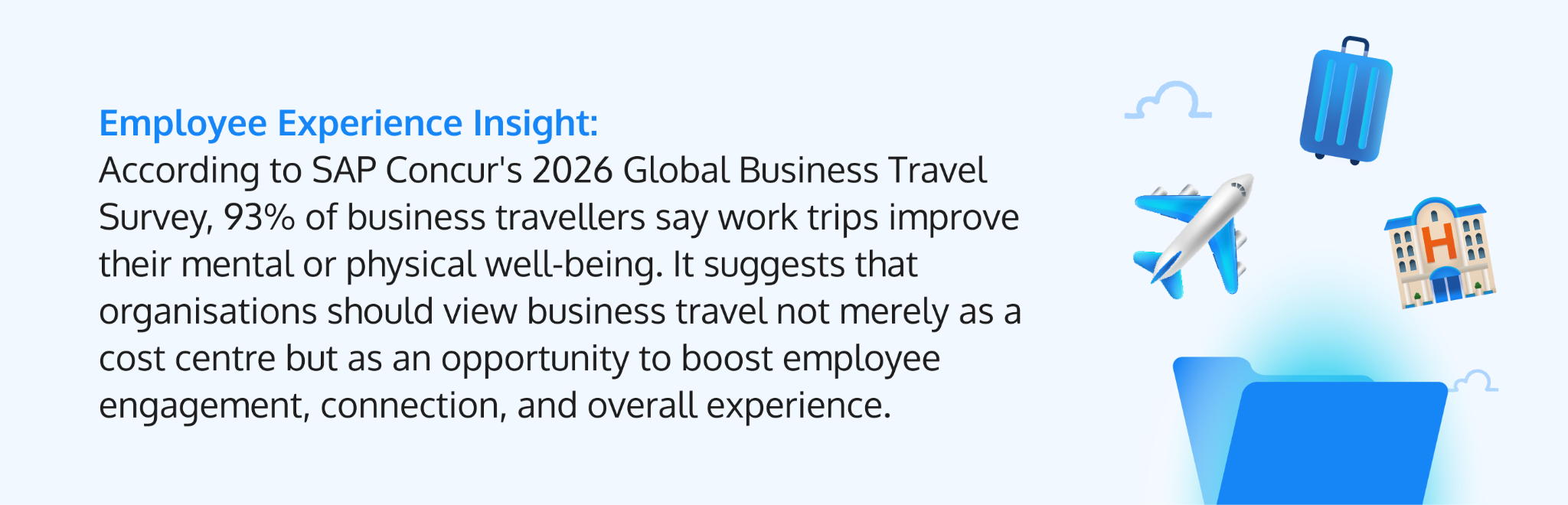
Reducing travel costs should never come at the expense of employee health and productivity.
For example, choosing a significantly cheaper flight with multiple stopovers may save money initially but could lead to fatigue, reduced performance and lower productivity.
Employee well-being strategies include:
- Reasonable travel schedules
- Convenient hotel locations
- Flexible travel options
- Access to emergency support
- Clear duty-of-care measures
According to the World Health Organization (WHO), employee well-being contributes directly to workplace performance and organisational effectiveness.
Key Takeaway
"A traveller who arrives rested and prepared delivers greater business value than one who arrives exhausted after a cost-cutting itinerary."
7. Automate Expense Management
Manual expense reporting creates inefficiencies for both employees and finance teams.
Integrated travel and expense management solutions can:
- Capture receipts automatically
- Categorise expenses
- Enforce policy compliance
- Generate real-time reports
- Reduce reimbursement delays
Employees spend less time on administrative tasks, while organisations gain greater financial transparency.
This improves both operational efficiency and employee satisfaction.
8. Promote Sustainable and Cost-Effective Travel Choices
Sustainability and cost reduction increasingly go hand in hand.
Organisations can reduce travel expenses and carbon emissions by:
- Combining multiple meetings into a single trip
- Encouraging rail travel where appropriate
- Using virtual meetings for routine interactions
- Selecting environmentally responsible accommodation partners
Many corporate travellers now actively prefer companies that support sustainable travel initiatives.
Industry Trend
A growing number of organisations are integrating sustainability metrics into their travel programmes alongside traditional cost-saving measures.
How WegoPro Helps Businesses Optimise Corporate Travel
Modern travel management requires more than booking tools—it requires visibility, automation and traveller-focused experiences.
WegoPro enables businesses to:
- Simplify corporate travel bookings
- Improve travel policy compliance
- Access competitive travel rates
- Gain real-time visibility into travel spending
- Enhance the traveller experience
- Strengthen duty-of-care support
By combining cost control with seamless travel management, WegoPro helps organisations build travel programmes that support both business objectives and employee satisfaction.
FAQs
What Metrics Should Companies Track to Measure Travel Cost Savings?
Companies should monitor average trip cost, advance-booking rates, policy compliance, preferred-supplier usage, cancellation fees, unused ticket credits, reimbursement time, and traveller satisfaction to determine whether savings are sustainable.
How Often Should a Corporate Travel Programme Be Reviewed?
Businesses should review travel spending and performance every quarter and conduct a complete policy review at least once a year. Reviews may also be necessary after major pricing, operational, regulatory, or workforce changes.
How Should Businesses Handle Exceptions to the Travel Policy?
Companies should establish a documented exception process. Requests should explain the business, safety, accessibility, or scheduling reason and be approved by the appropriate manager before booking whenever possible.
Which Business Travel Expenses Should Companies Avoid Cutting?
Businesses should avoid cost reductions that compromise traveller safety, reasonable schedules, suitable accommodation, essential baggage, connectivity, accessibility requirements, or emergency assistance. These areas directly affect employee well-being and trip effectiveness.
Can Small Businesses Reduce Travel Costs Without a Dedicated Travel Manager?
Yes. Small businesses can introduce a simple travel policy, centralise bookings, require pre-trip approval, encourage advance booking, set spending limits, and use a corporate travel platform to monitor expenses.
How Can Traveller Feedback Help Reduce Corporate Travel Costs?
Traveller feedback can identify inconvenient suppliers, inefficient approval processes, hidden expenses, and policies that create unnecessary out-of-policy bookings. Businesses can use these insights to improve both savings and employee experience.
What Is the Total Cost of a Business Trip?
The total trip cost includes flights, accommodation, ground transport, meals, booking fees, changes, cancellations, employee time, and other related expenses. Measuring the complete cost provides a more accurate view than considering the fare alone.
How Can Companies Reduce Losses From Cancelled Flights and Unused Tickets?
Companies can choose flexible fares when appropriate, maintain visibility over travel credits, centralise bookings, set cancellation procedures, and use automated reminders to apply unused ticket value to future trips.