
Managing Corporate Travel Risks: A Guide for Travel Managers
Travel risk management helps businesses protect employees and reduce travel disruptions. WegoPro simplifies risk management with one integrated platform.


Business travel is entering a new era of growth.
According to the Global Business Travel Association (GBTA) Business Travel Index™ Outlook, global business travel spending reached US$1.57 trillion in 2025 and is expected to continue growing in 2026.
The report also found that 86% of business travellers believe their trips are worthwhile, showing that in-person meetings continue to play an important role in achieving business goals.
As business travel grows, so do the responsibilities of travel managers. Today's travel programmes must balance three critical priorities:
- Ensuring employee safety and well-being.
- Managing rising travel costs.
- Delivering a seamless traveller experience.
Organisations that successfully align these priorities can strengthen policy compliance, improve operational efficiency, and maximise the return on their travel investment.
Why Corporate Travel Risk Management Matters
Travel Risk Management (TRM) is about helping employees stay safe while travelling for work. It involves identifying possible risks before a trip, monitoring travellers during their journey, and having plans in place to respond quickly if something goes wrong.
A good travel risk management programme typically includes:
- Assessing risks at the destination before employees travel.
- Tracking travellers in real time.
- Providing emergency support during unexpected situations.
- Making sure employees follow the company's travel policy.
- Educating travellers on how to stay safe during their trip.
The Rising Cost of Business Travel: Challenges for Travel Managers
While business travel demand continues to rise, travel managers face mounting budget pressures.
Deloitte's Corporate Travel Study found that companies are struggling to balance increased demand for in-person interactions with higher travel prices across flights, hotels, and transportation services.
Additionally, GBTA research shows that many organizations have experienced increased travel program costs due to hybrid work arrangements and evolving workforce expectations.
This leads to a pressing question:
How can companies reduce travel costs without negatively impacting employee experience?
The answer lies in smarter travel management rather than simply cutting budgets.
5 Ways Travel Managers Can Cut Costs Without Compromising Traveller Experience
Rising travel costs are putting pressure on travel budgets, but cutting corners isn't the answer. Explore five practical ways travel managers can optimize spend while delivering a seamless travel experience for employees.
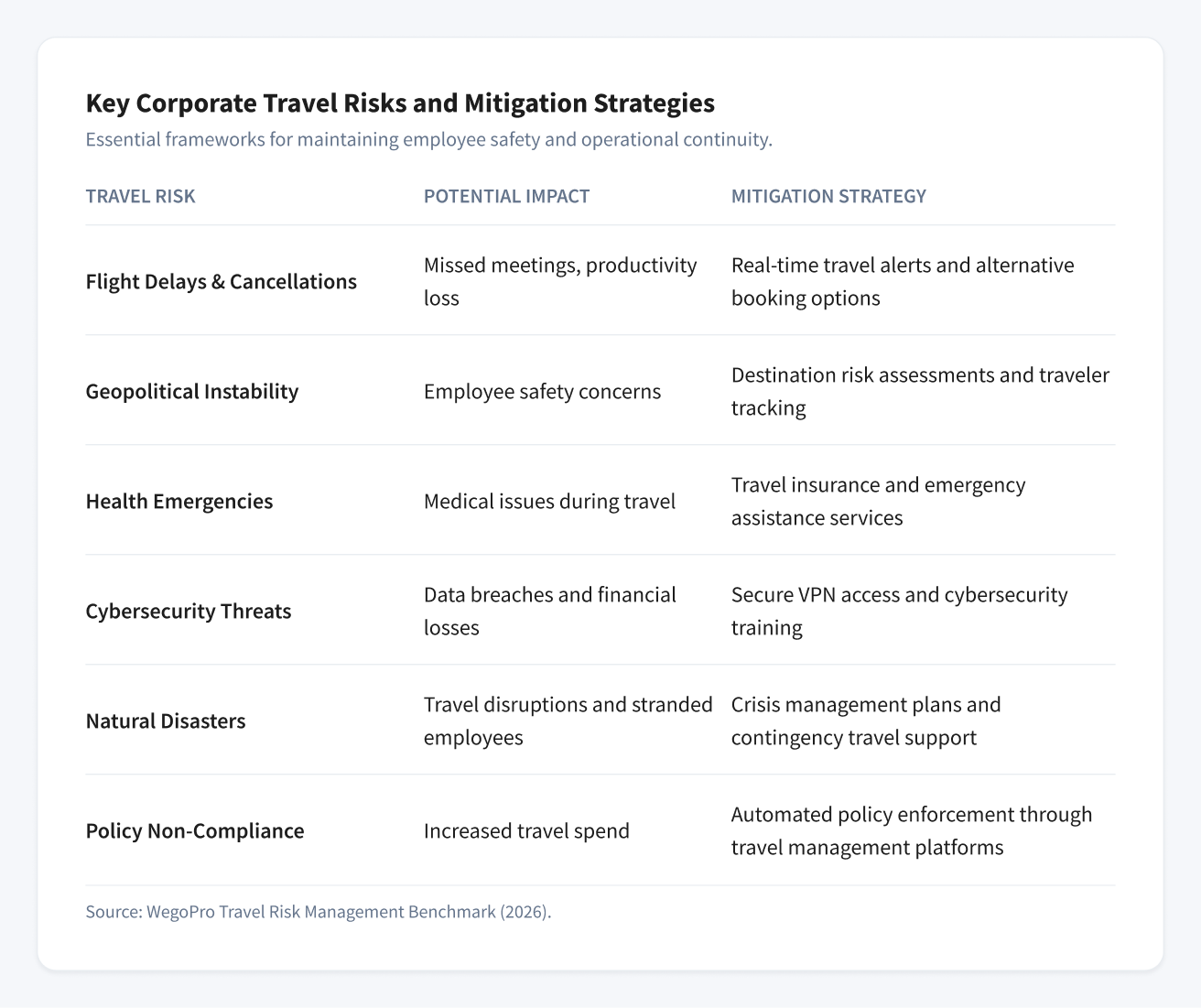
WegoPro Insight: For travel managers, effective risk mitigation means having the visibility and tools to act before issues escalate. Integrated travel management helps strengthen duty of care, improve compliance, and minimise disruptions across every journey.
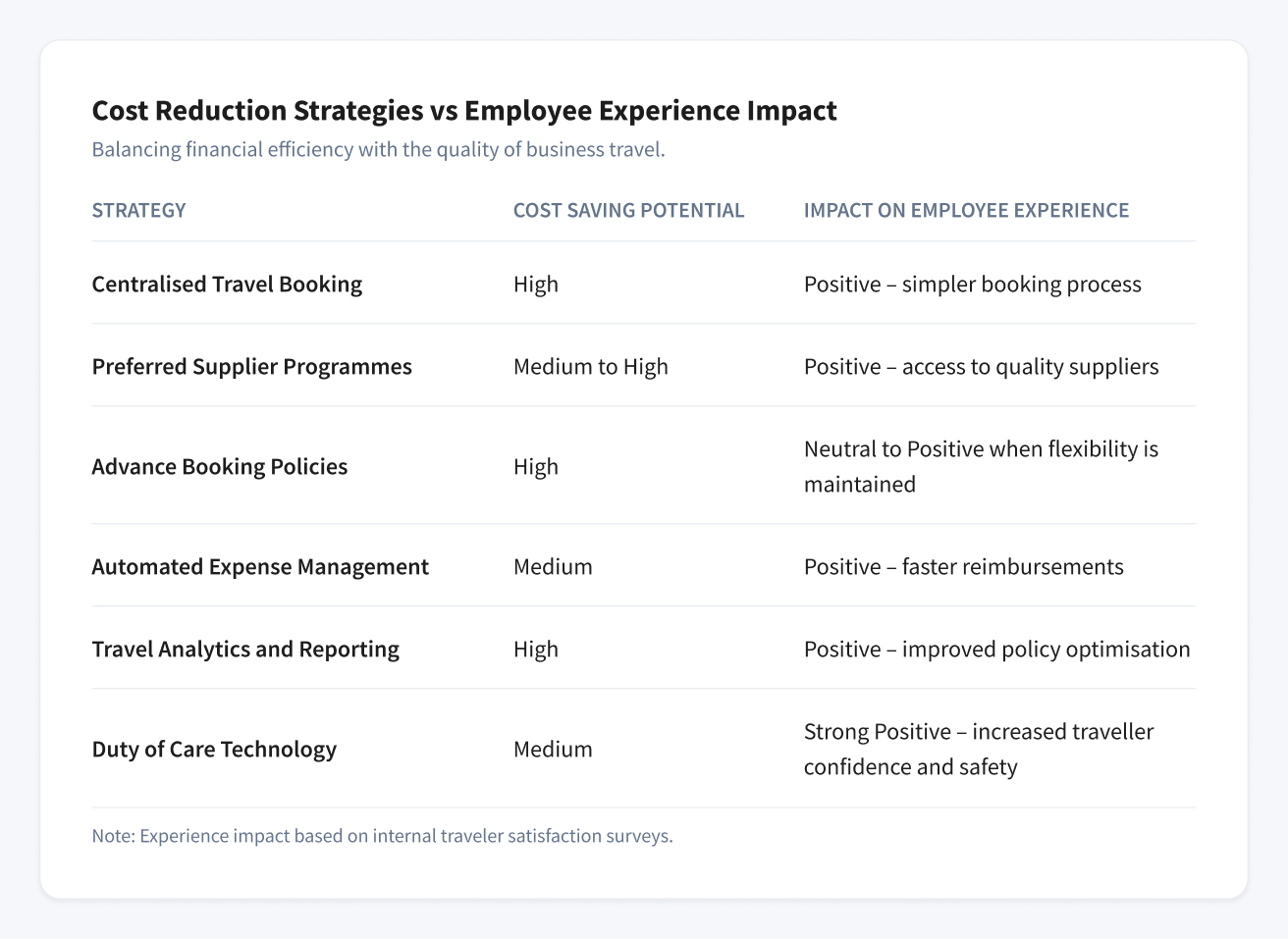
WegoPro Insight: The goal isn't choosing between cost control and employee experience. With the right technology, businesses can achieve both through smarter planning, automation, and real-time visibility.
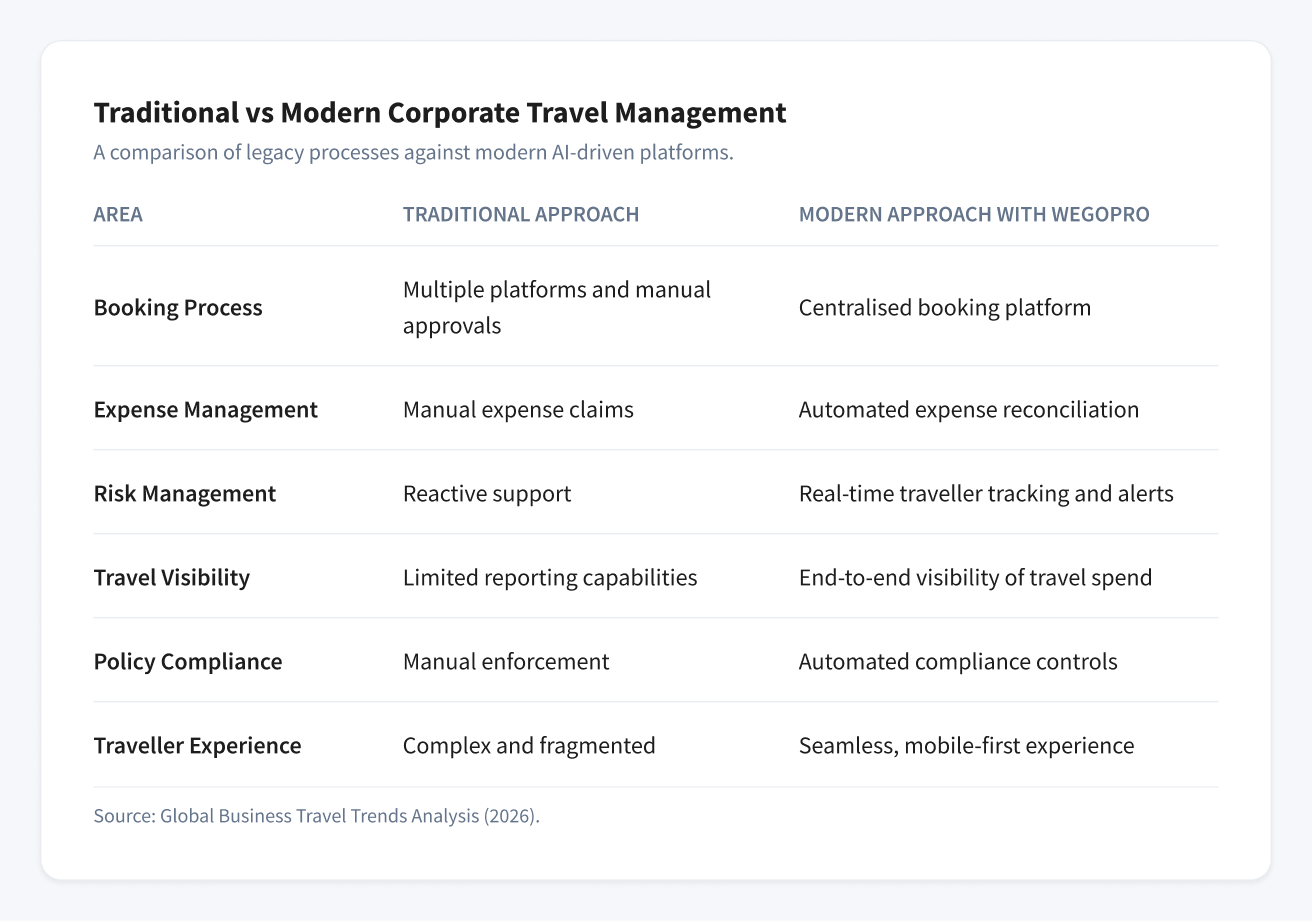
WegoPro Insight: Replacing manual processes with an integrated travel and expense platform helps travel managers reduce administrative work, improve policy compliance, and make informed decisions with real-time data.
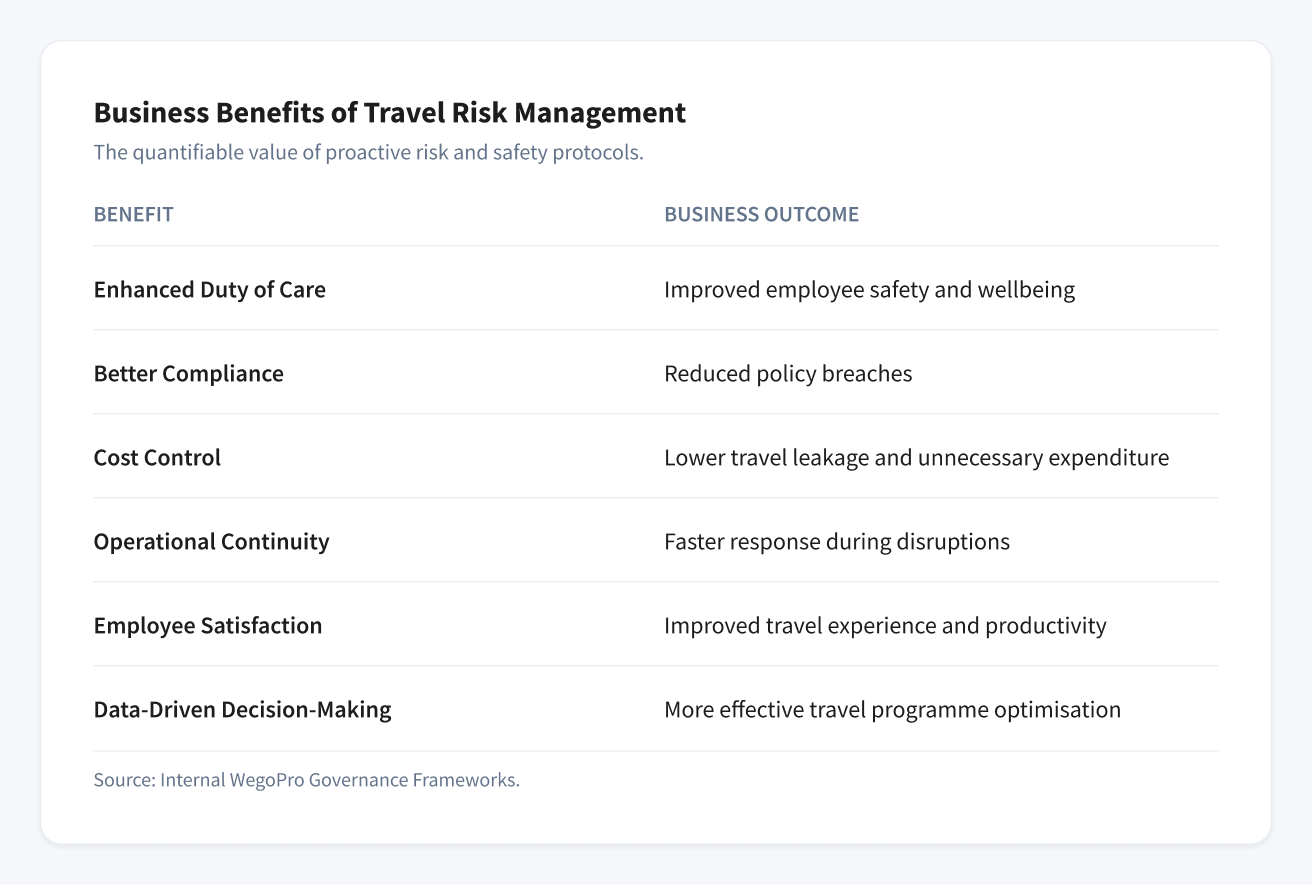
WegoPro Insight: A proactive travel risk strategy strengthens duty of care while helping businesses minimise travel disruptions, improve operational efficiency, and deliver a better experience for employees.
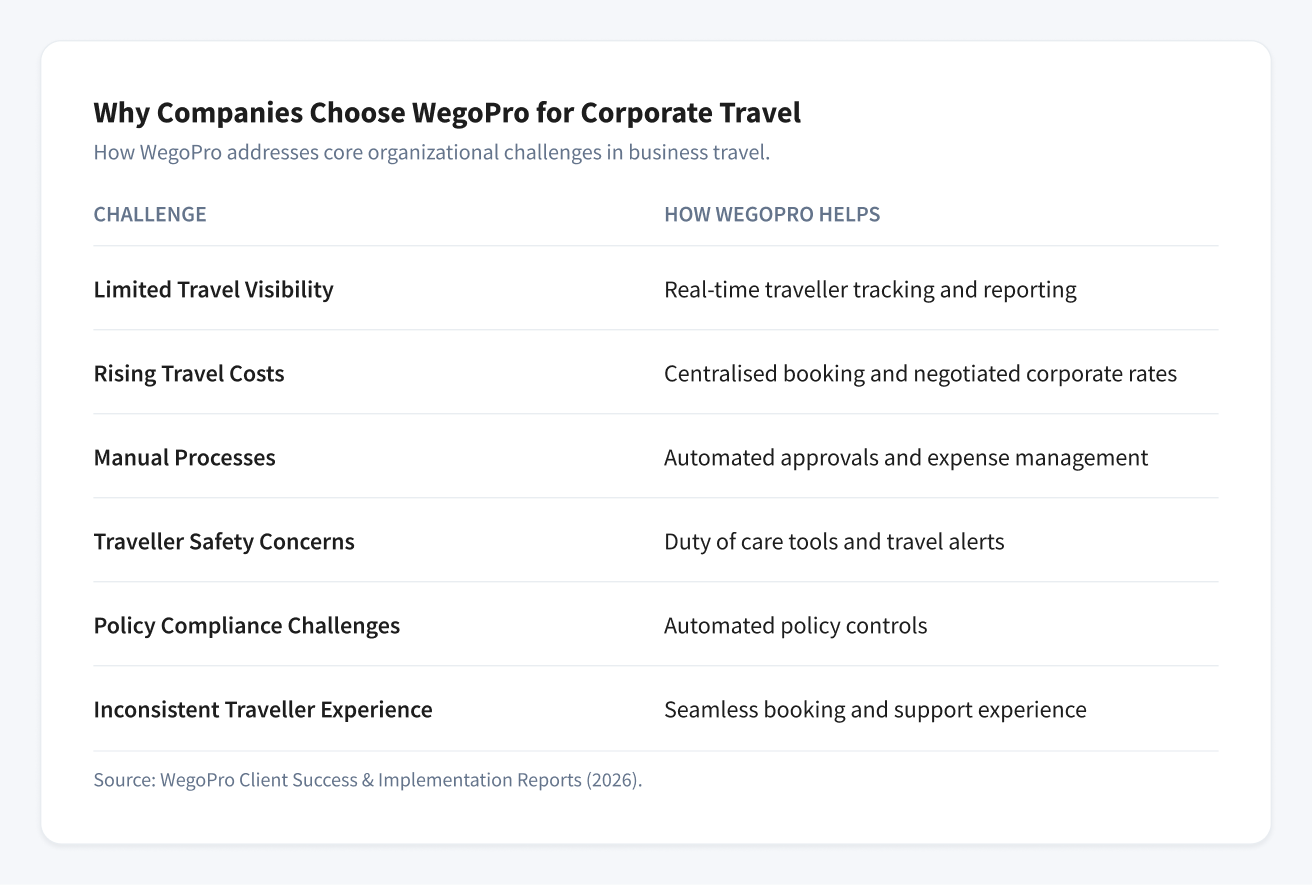
WegoPro Insight: The right technology turns travel challenges into business opportunities. WegoPro helps organizations reduce manual work, control costs, improve compliance, and create a seamless experience for every traveller.
More from the WegoPro Blog:
21 Business Travel Safety Tips and Guidelines for Modern Professionals
Managing Corporate Travel Risks with WegoPro
WegoPro helps simplify corporate travel risk management by bringing travel bookings, expense management, policy compliance, approvals and real-time travel visibility into one platform. With built-in automation and traveller-focused features, travel managers can strengthen duty of care, improve compliance, reduce administrative effort and make more informed travel decisions.
As business travel continues to evolve, having the right technology in place enables companies to proactively manage risks while delivering a safe, efficient and seamless travel experience for every employee.